| Home > West Point | ||
|
|
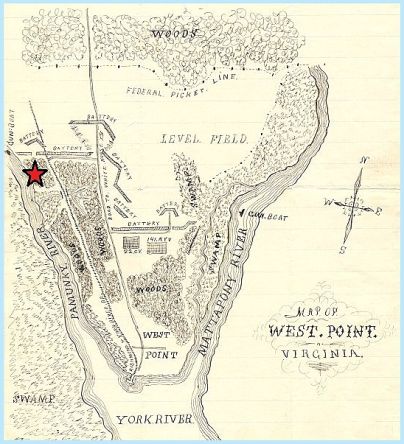
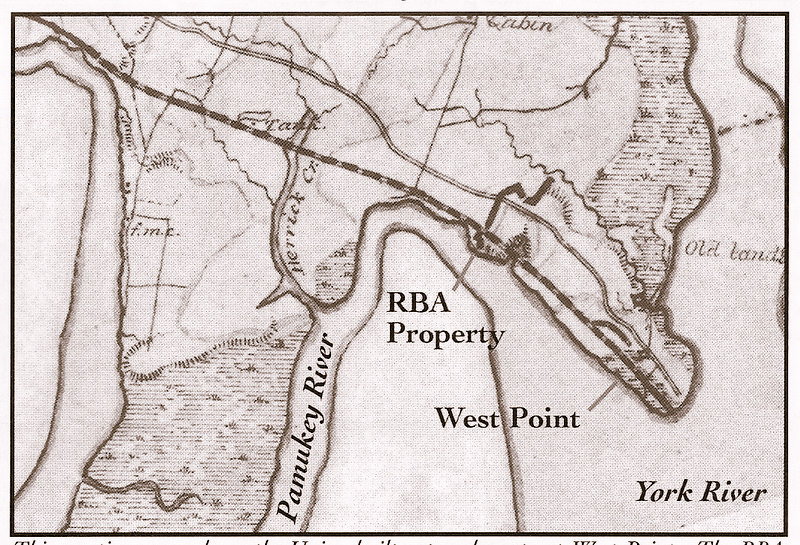
West Point (Pamunkey River Fort)River Battery Preserved: In 2009 a preservation-minded landowner donated this histroic site to the Richmond Battlefields Association. Perched on a bluff overlooking the Pamunkey River, the property contains a remarkably well-defined artillery position. Though small, its historical value is immense; these 1863 earthworks are the last surviving remnants of a Union defensive line that stretched across the peninsula to the Mattaponi River. While the land was a gift, the RBA incurred significant costs for the surveying, title work, and legal fees necessary to secure the property. Your support makes these essential land transactions possible. West Point, VirginiaIn 1691, the General Assembly authorized the purchase of 50 acres of West Point Plantation to establish "Delaware Town," though the settlement eventually failed and reverted to its original plantation status. During the American Revolution, the area regained strategic importance, leading French allies to designate it "West Point du Sud" (West Point of the South) to differentiate it from the stronghold in New York.
May - July 1863The town of West Point, situated 35 miles east of Richmond at the confluence of the Mattaponi and Pamunkey rivers, served as a vital strategic hub. As the terminus of the Richmond & York River Railroad and the head of the York River, control of this location dictated naval and rail traffic along this avenue into the Confederate capital. On May 7, 1863, thousands of Union soldiers under Gen. John A. Dix disembarked from transports to occupy the village. Their mission was to establish a base of operations to destroy resources and supply line aiding the Confederate war effort. To secure their position against potential interference, the Federals immediately began fortifying the narrow peninsula. Their defensive line ran on an east-west axis between the two rivers, anchored by six artillery emplacements. While each battery was individually named, historical records suggest that the position now preserved by RBA is likely either "Battery McClellan or Battery Lincoln." The Union soldiers transformed the landscape into an unusually strong defensive position. They cleared timber to create unobstructed fields of fire, demolished buildings in their path, and constructed a sophisticated network of abatis, magazines and bombproofs. A soldier from the 144th New York noted the sheer scale of the labor: "We have done a vast amount of labor... Have built 4 forts & some[thing] over a mile of rifle pits of the heaviest kind being 4 feet thick on top 10 & 12 on the bottom & as high as a man's head." Despite the intense labor, the fortifications never saw combat. With Gen. Robert E. Lee’s army operating in Pennsylvania, Federal planners determined that Dix’s relatively small force was of little value loitering so far from the decisive theaters of operation. By July 8, 1863, the last of the bluecoats sailed away, leaving behind a pristine and formidable defensive line that had never fired a shot in its own defense. |
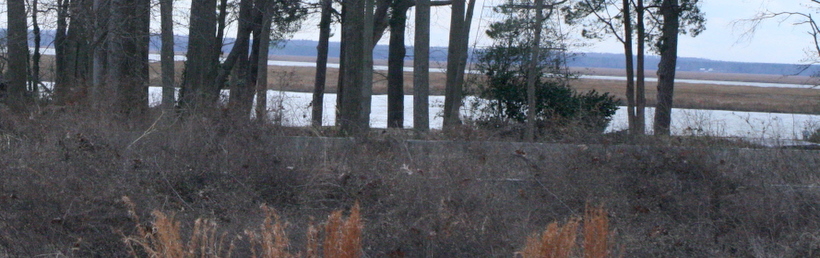
Above: Union fort overlooking the Pamunkey River.
Placed by a conscientous landowner: |
| Top of Page | Previous Page | Home | ||

|
|
|