Ware Bottom Church
Preservation success in Chesterfield County: In 2009, a local company donated this historic site along the Bermuda Hundred front to the Richmond Battlefields Association, marking the RBA’s first preservation success in Chesterfield County. The tract is highly significant as the site of Ware Bottom Church, the namesake of the May 1864 battle. One of the oldest churches in Virginia at the time, the building was tragically destroyed during the heavy fighting. Today, this property stands as a protected landmark, honoring both the colonial and Civil War history of the region.
Battle of Ware Bottom Church
May 20, 1864
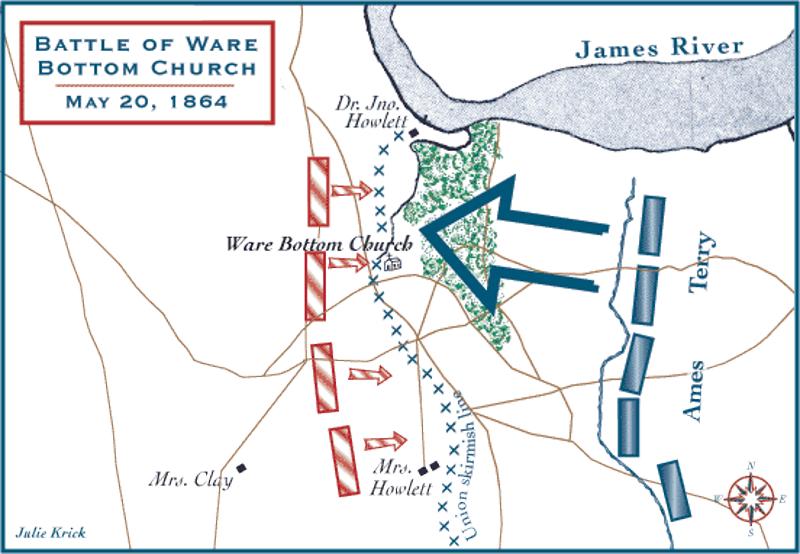
Following the Union defeat at Proctor's Creek, Maj. Gen. Benjamin Butler withdrew the Army of the James to the Bermuda Hundred peninsula. Within days, Gen. P.G.T. Beauregard launched eight Confederate brigades to crush Butler's advance picket lines. In the fierce clash that followed, nearly 10,000 soldiers fought in the vicinity of Ware Bottom Church. The Confederate victory shortened their defensive front, allowing Beauregard to send Robert Hoke's entire division to reinforce Lee at Cold Harbor. By nightfall, the engagement left over 1,400 men dead or wounded.
The Howlett Line
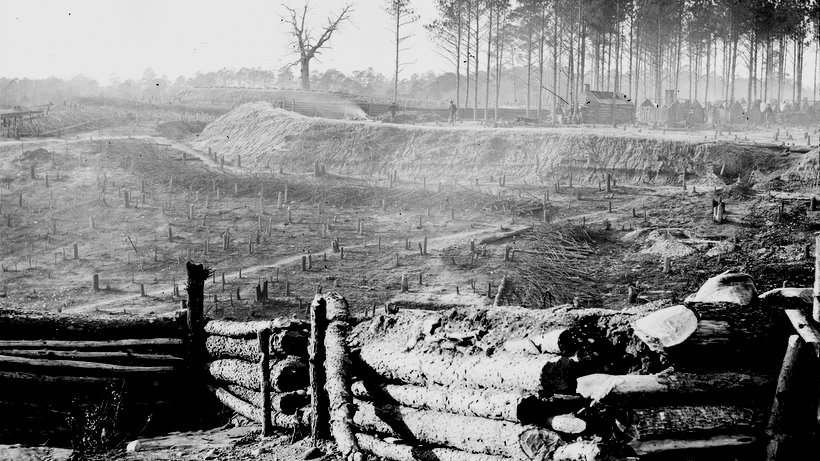
The Confederates soon constructed formidable works between the James and Appomatox rivers, effectively trapping the Federals on the peninsula - "as in a bottle strongly corked", as President Lincoln famously observed. In June, as Grant moved against Petersburg, Beauregard was forced to abandon the line to meet the crisis there, briefly returning the Ware Bottom Church area to Union control.
June 16, 1864
As Lee’s army raced toward Petersburg, they paused to strike Butler once more. Gen. George Pickett’s division retook the abandoned ground and reestablished the Confederate line. During the struggle, the 11th Maine Infantry fought a desperate action literally within the churchyard.
The historic church stood until June 18, 1864, when it became an unbearable source of annoyance for the artillerists of Parker's Virginia Battery (a NPS site), only a few hundred yards west of the church. Federal sharpshooters had been using the church to harass the gunners. In response, three volunteers from the battery crawled out through their own picket lines to set the structure ablaze. The church burned to the ground, and for the next ten months the site reamined a desolate part of "no man's land" between the warring armies.
|